
白露
From the grove to the sky: Chinese team develops drone made of bamboo-based composites_我的网站

A |
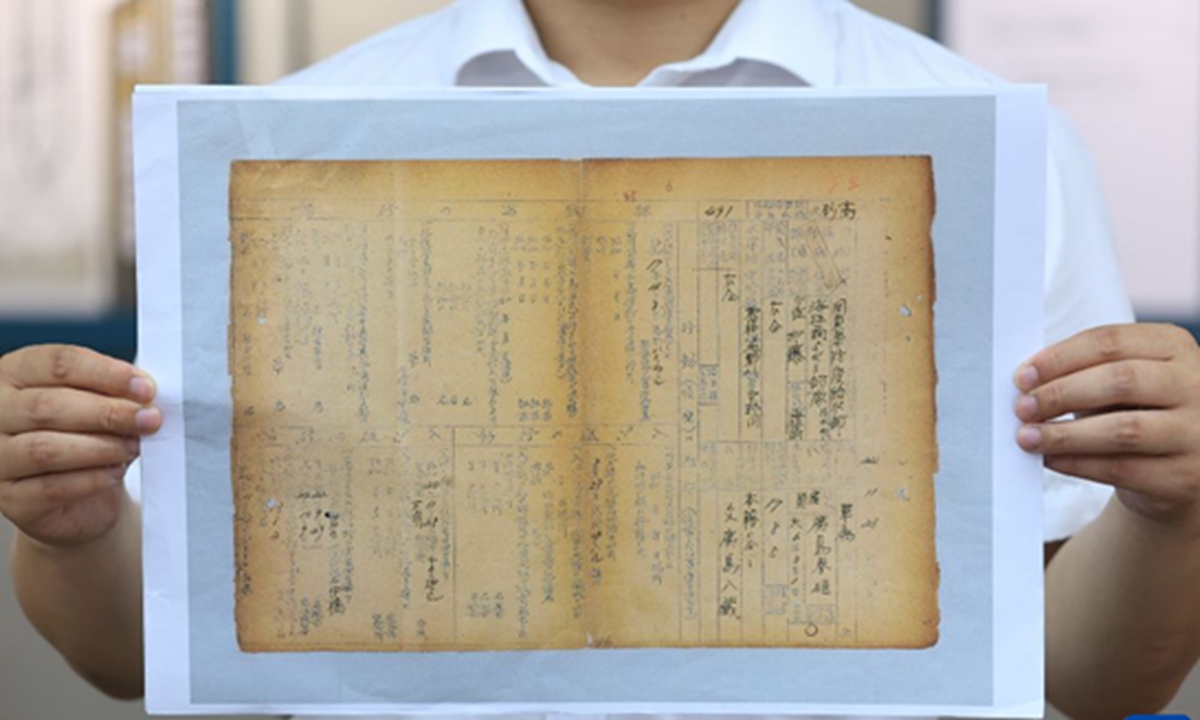
Newly released wartime records from the Hailar branch of Japan's notorious Unit 731 reveal how the Japanese military disguised biological warfare personnel as conventional infantry troops to conceal secret operations, including human experimentation.
The Exhibition Hall of Evidences of Crime Committed by Unit 731 of the Japanese Imperial Army released on Wednesday a 185-page archive of "personal background declaration" from the Hailar branch of Unit 731, also known as "Manchuria Unit 543". The documents show that the Japanese military concealed its biological warfare operations under the guise of conventional infantry units and shed new light on the Soviet Union's continued efforts after World War II to investigate and prosecute Japanese biological warfare crimes.
Unit 731 was a top-secret biological and chemical warfare research base established as the nerve center for Japanese biological warfare in China and Southeast Asia during WWII. At least 3,000 people were used in human experiments conducted by Unit 731, and more than 300,000 people in China were killed by Japan's biological weapons, according to the Xinhua News Agency.
The Japanese Kwantung Army established five branches of Unit 731 in Northeast China - in Hailar, Sunwu, Mudanjiang, Linkou and Dalian. Located in the northeastern part of the Inner Mongolia Autonomous Region, near China's borders with Mongolia and the Soviet Union, the Hailar branch served as a frontline base of the Japanese imperialist army for potential biological warfare operations against the Soviet Union.
The newly released 185-page archive contains key information on 156 members of the Hailar branch of Unit 731, including their names, military ranks, dates of enlistment, duties, transfers and postwar whereabouts. Researchers said the documents constitute first-hand official records for studying the branch's personnel structure and operations.
Jin Shicheng, a researcher at the Exhibition Hall, said the study produced two major findings. First, the documents reveal that the Japanese military recruited personnel under the cover of ordinary infantry units to conceal biological warfare activities. Some personnel, for example, were recruited under the names of conventional units such as Manchuria Unit 97, Unit 177 and Unit 201. They were then sent to Unit 731 headquarters for three months of training before being assigned to the Hailar branch. The deceptive recruitment system was intended to conceal the crimes committed by Unit 731, including human experimentation.
Moreover, the archive provides evidence of continued postwar investigations into Japanese biological warfare crimes. Of the 156 personnel listed in the documents, 145 were captured by Soviet forces after the war and detained in the Soviet Union. Four were tried in Khabarovsk between April and September 1950. The researcher said the records show that Soviet investigations and judicial efforts concerning Japanese biological warfare crimes continued after the trial held in 1949.
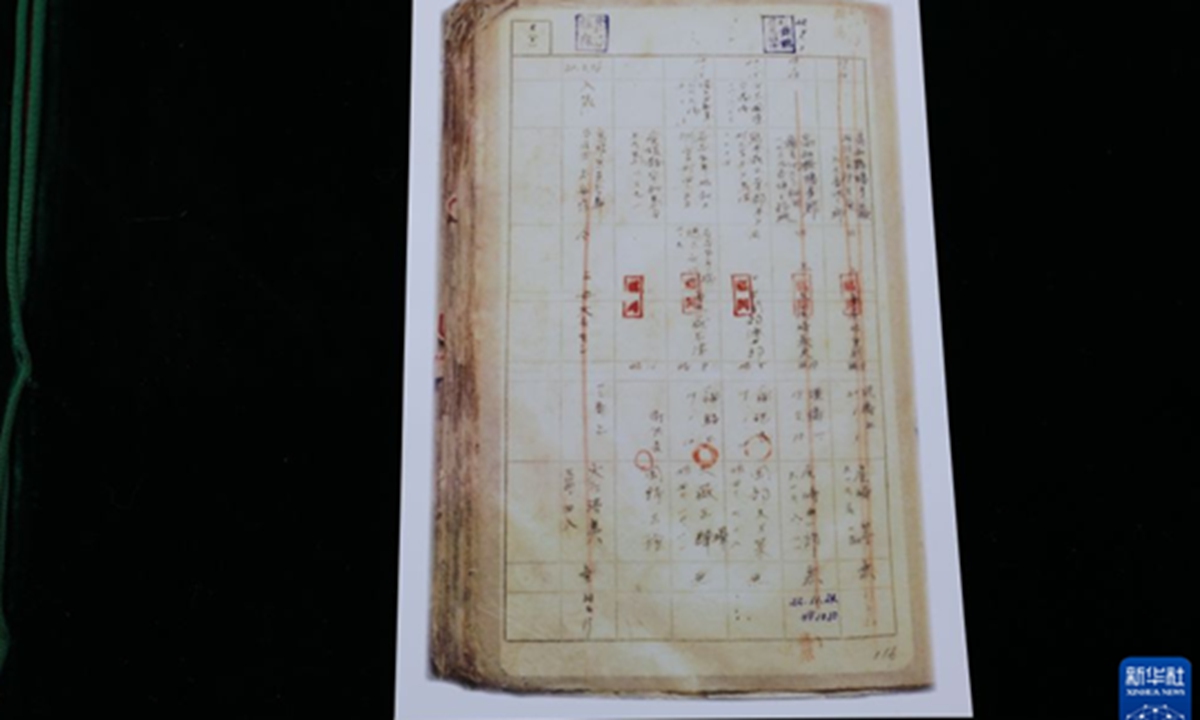
A photo published by Xinhua showed a record on medic Tanizaki Hitoshi in the "personal background declaration" records of Unit 731's Hailar branch. Tanizaki, originally named Ozaki Hitoshi, is documented in historical records that, together with his oral testimony, form a chain of evidence further substantiating the crimes committed by Unit 731.
Experts said the new revelation of the Hailar branch deepens research into Unit 731 and, together with previously obtained oral testimony from former members, form a broader chain of evidence. The official records exposed the efforts by the Japanese military to disguise their crimes against humanity and provided further evidence of the state-organized system behind Japan's biological warfare program, while adding important material to research on Unit 731 and postwar prosecutions.
Global Times
。

Long Bamboo, a company based in East China's Fujian Province, developed the technique that preserves the bamboo's tough outer layer and allows different parts with different densities of the material to be used according to their properties, improving its overall performance.
In the past, the outer skin of bamboo was often treated as leftover material and eventually burned into low-value bamboo charcoal.
According to a company release in February, bamboo-based composites now make up more than 25 percent of the entire drone, while its fuselage skin is made entirely from the company's own high-performance bamboo composite material.
The bamboo-based material also offers a major cost advantage, costing only about one-quarter to one-tenth as much as aviation-grade carbon fiber. After the drone is retired, the material can naturally degrade, allowing it to effectively "come from nature and return to nature."
The team spent four years building data models, upgrading equipment and refining the material. The resulting drone has a wingspan of more than 2.5 meters but weighs only about 7 kilograms, and has already completed multiple test flights, according to CCTV News.
Bamboo was traditionally used mainly in products such as tableware and furniture. Now, however, the material is finding its way into a wider range of industrial applications. Bamboo fiber is being used in automobile interiors, while bamboo-based materials are also being explored as possible substitutes for plastics, glass fiber and carbon fiber in some applications.
China has the world's largest bamboo resource base, with about 7.56 million hectares of bamboo forests nationwide. The country also ranks among the world leaders in bamboo resources, bamboo cultivation technologies and the development and utilization of bamboo materials, per CCTV News.
Global Times
。
Current article:http://1zcwi.minpinpengcemiuanjiuxuan.pics/list_h07o/o9nnow1.html
Published on:21:29:03
荆棘鸟_Random reading
- 08-24格鲁吉亚通过反外国渗透法案,欧盟严重关切,美国“深感不安”
- 08-24老詹经纪人:哈登提前看清快船局势选择离开 必须为这手操作点赞
- 08-21普京丢掉奇怪方案,大量炸弹落向基辅,乌军抓壮丁,百姓开始反抗!,千羽解读,原创 普京丢掉奇怪方案,大量炸弹落向基辅,乌军抓壮丁,百姓开始反抗!
- 08-21新疆五方面做好防控资源储备工作 完善集中隔离点房间储备_检测_疫情
- 08-24《关于做好长期护理保险支付管理工作的指导意见》的政策解读
- 08-25Neha Dhupia REVEALS Saif Ali Khan secretly uses a private social media account
- 08-21《GTA 6》游戏泄露视频再曝,玩家可购买耳机 / 手机壳等
- 08-22雷军:红米红米新机器可以现货购买
- 08-23At least 12 killed and many injured when one train hits another in central Bangladesh
- 08-20西北小团司机和领队是同一个人,到底靠不靠谱?

环太平洋_Active users
- A $1.4 million speeding ticket surprised a Georgia man before officials clarified the situation
- 他任兰州军区副司令员,73年被叶帅借调总参,忙到无暇睡觉,漫步史书V,原创 他任兰州军区副司令员,73年被叶帅借调总参,忙到无暇睡觉
- 俄罗斯外交部宣布保护居住在波罗的海国家的同胞
- 广州防暴雨内涝应急响应降为三级
- 132元!小米蓝牙音箱磁吸版成爆款:众筹超71万元 浅咖色售罄
- 杭州发布台风蓝色预警!“白海豚”将在苍南到象山一带沿海登陆,我市今天有雷阵雨,局部大到暴雨
- China honors Shenzhou-21 mission astronauts with medals
- 1 dead, 2 injured by gunshots near a pro-democracy protest in Guatemala
- Tokyo Expected to Hike Defense Budget Following Liberal Democrats’ Resounding Election Win
- 郑氏点银:黄金大幅抛售回归弱势,原油震荡下调_反弹_一线
- 事关贷款贴息 多家银行发布公告明确
- 大乐透第26088期开2注一等奖
- Shah Rukh Khan Says His Parents Passing Became The Turning Point of His Life
- 不肝不氪!休闲MMO《史莱姆世界》试玩版8月26日上线
- 新易盛:2026年半年度净利润同比增长90.98%
- 高通妙龙675跑出炉子:174402点,略高于妙龙710点。
- 补时绝杀取胜,安切洛蒂社媒:就是要拿出这样的态度!
- 福建海事局启动防台风二级应急响应,多条航线停运停航
破晓之爱_Hottest this week
- 白露 copyright
- Some of the content comes from the Internet. If you have any offence, please raise it.